Technology
One system, from helm to propeller
The engineering behind every ZEM package: batteries, propulsion, charging and control, designed and delivered as one system.
The ZEM system
Engineered around how the vessel works
A battery, a motor and a charger do not make a vessel electric. The system has to be engineered around the vessel's route, its load profile, and where and how fast it can charge.
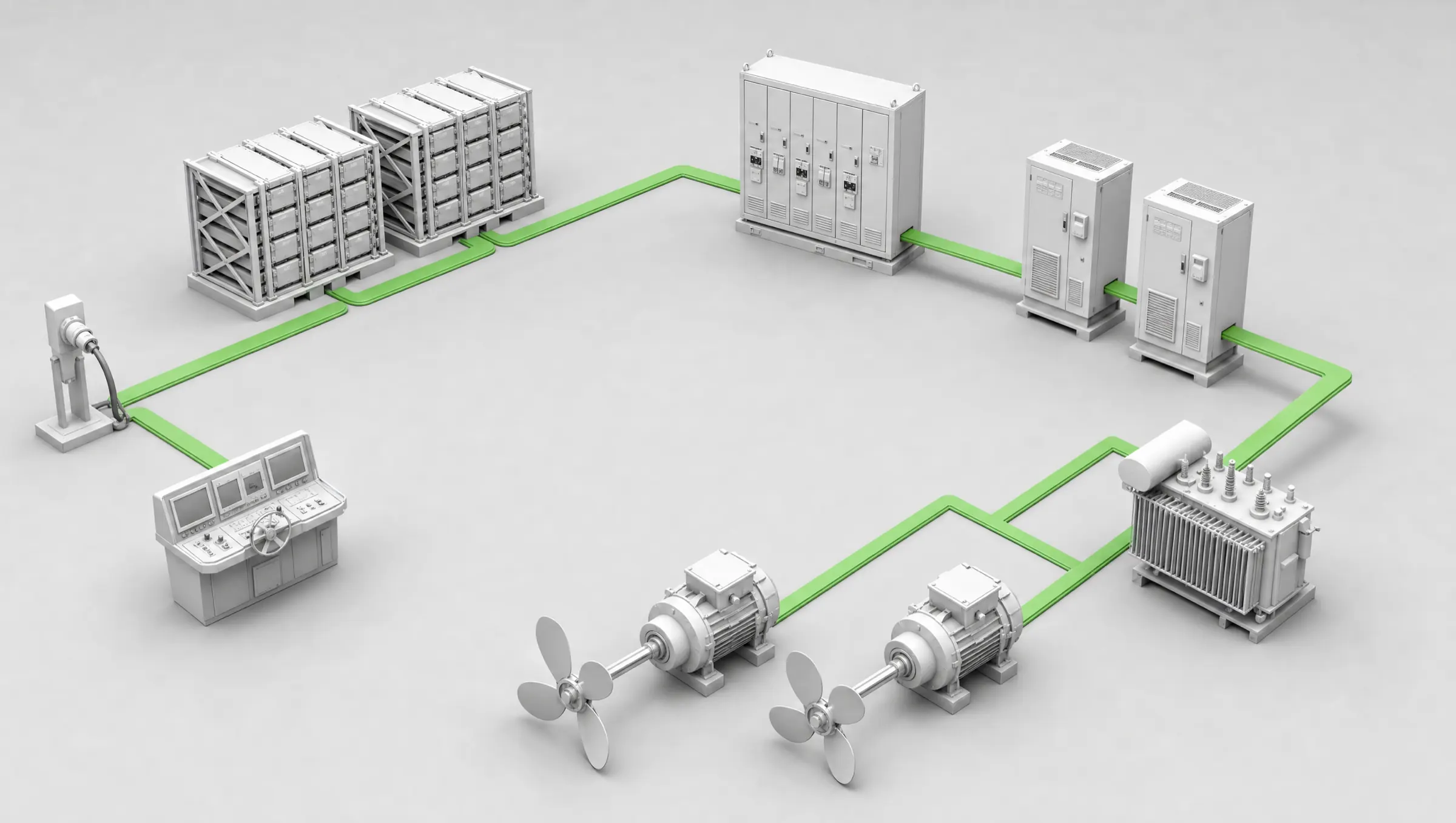
ZEM designs the whole chain, from the charging connection and the battery to the switchboard, converters and propulsion motors, and runs it with one control system.
01 · Batteries
Our batteries, built up from the cell
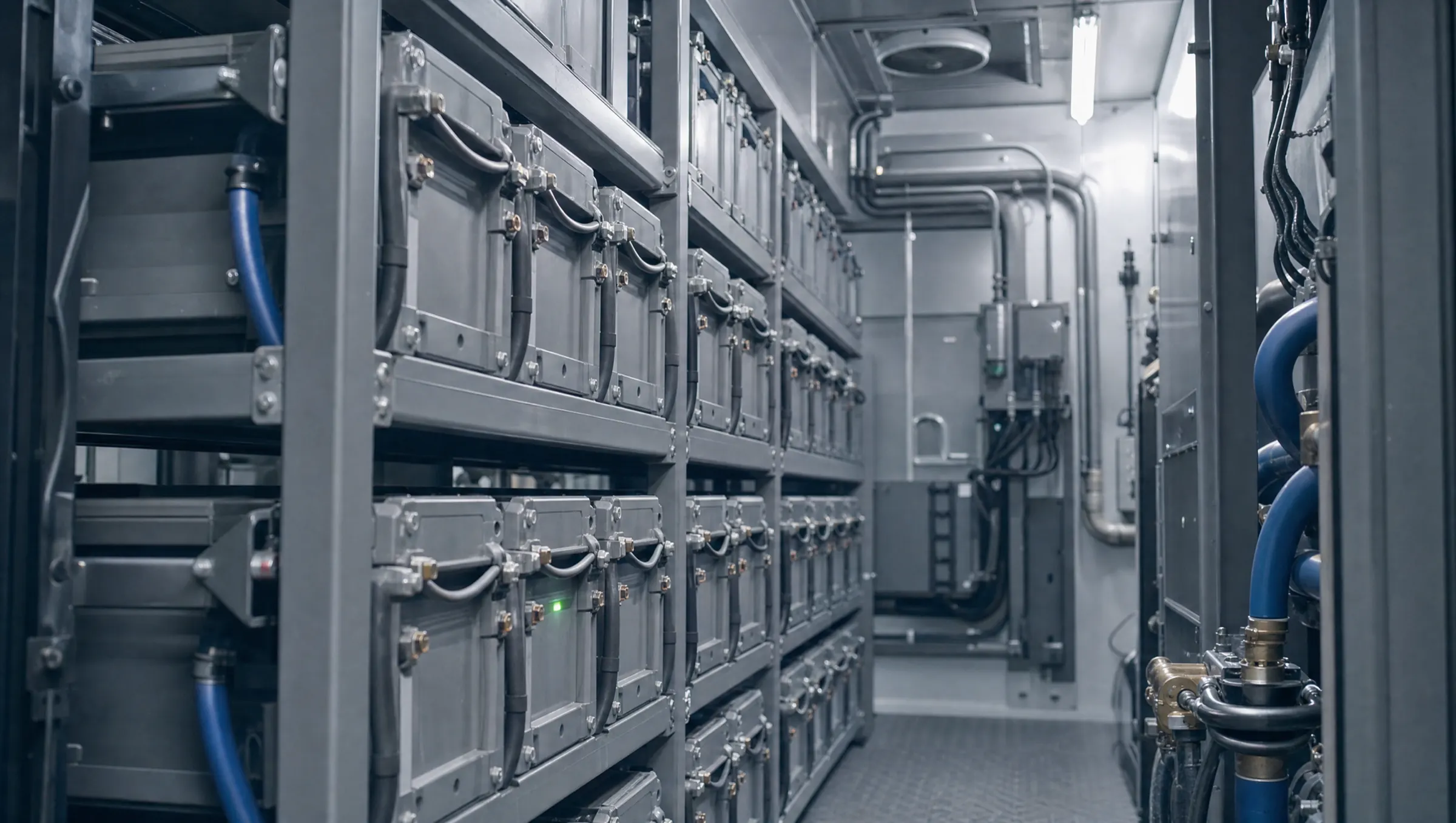
ZEM builds its battery systems brick by brick, from the cell to the system, and designs the battery space around them. From 33 kWh to as large as the vessel needs, DNV type-approved and backed by the Volvo Group.
| Capacity | From 33 kWh, no upper limit |
|---|---|
| Chemistry | NMC, NCA and LFP |
| Battery systems | NMC Flatpack, NCA Volvo Cube, LFP Power and Energy packs |
| Approval | Marine type-approved |
| Thermal management | Liquid-cooled and heated |
| Battery space | Designed by ZEM, with sensors, ventilation and fire suppression |
01
Cell
LFP or NMC cells, chosen for the vessel's drive cycle: power for short, hard bursts, energy for long crossings.
02
Module
Cells in a liquid-cooled module, monitored cell by cell for voltage and temperature.
03
String
Modules in series up to the vessel's DC voltage, each string with its own battery management.
04
System
Strings in parallel on the DC bus, from a compact system to megawatt-hours, in a battery space designed by ZEM.
Approvals and certificates
- Battery systems type-approved by DNV for use at sea
- DNV type-approved
- Part of the Volvo Group through Volvo Penta, with the strength of a large group behind every system
- Backed by Volvo
- Batteries taken back at end of life and recycled under the regulations
- Battery return
- ZEM Havlire energy storage approved by DNV or BV at sea, and CE-marked on land
- DNV or BV · CE
02 · Propulsion
Electric and hybrid propulsion
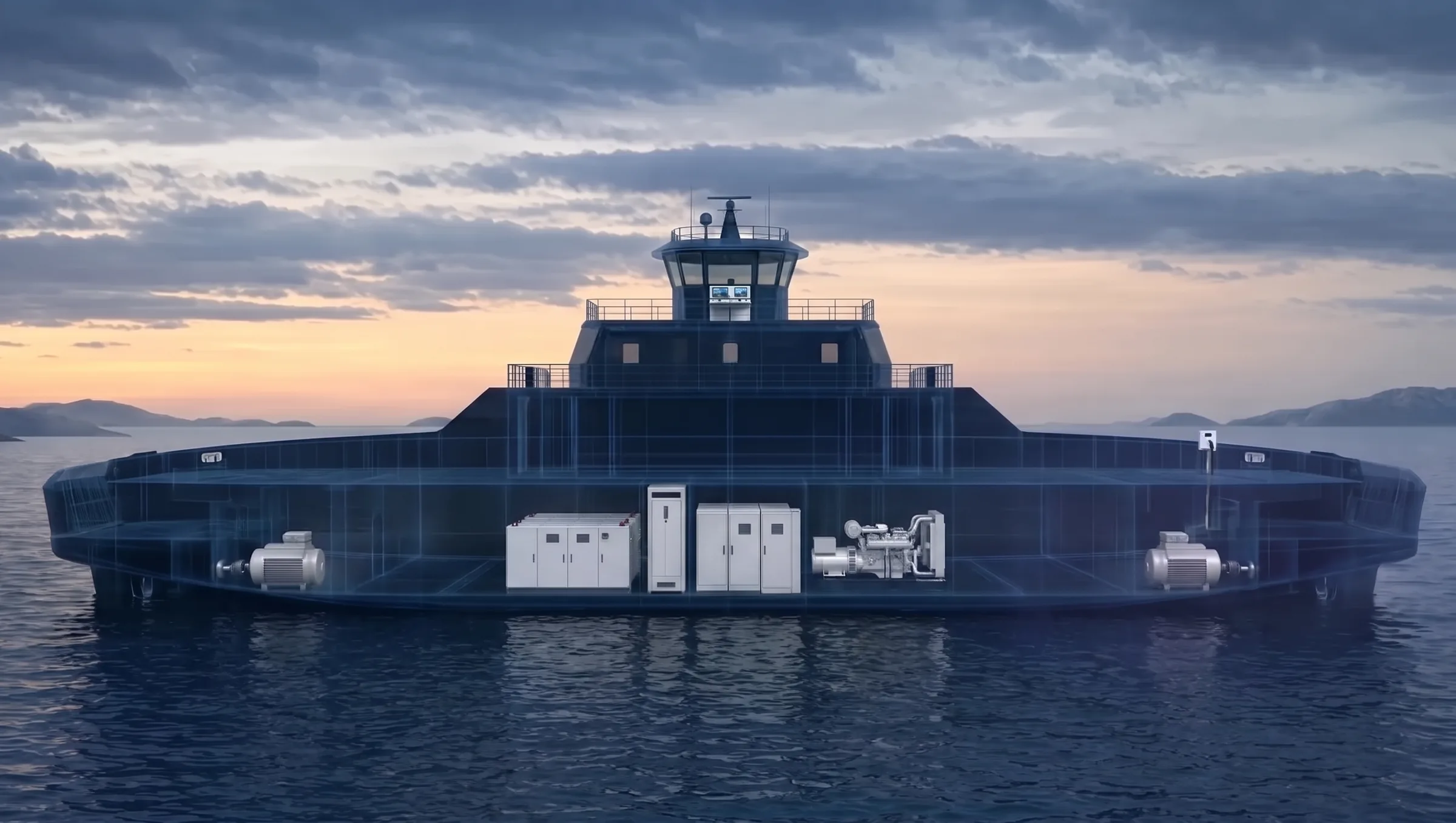
Propulsion motors and generators combined with battery, charging and auxiliary systems into one driveline. Shown here in a double-ended ferry, with a motor at each end.
| Motors and generators | Sized to the vessel, no upper limit |
|---|---|
| Operation | Fully electric, or hybrid with gensets |
| Energy on board | Battery, shore power and gensets, managed as one |
| Volvo Penta | Full integration of Volvo Penta components |
03 · Charging
From shore power to megawatt charging
Each vessel is tailored to the charging it will actually have at the quay.
No grid at the quay? ZEM Havlire brings the energy: mobile battery containers from 150 kWh to 1.4 MWh.
| AC chargingWith onboard transformers, several cables per vessel | 125 A · 400 V per cable |
|---|---|
| DC fast charging | CCS2 · up to 600 kW |
| Megawatt charging | MCS · about 800 kW today |
| Megawatt charging, next3.7 MW is the top of the standard | MCS · 1.2 MW, up to 3.7 MW |
04 · Control and software
One control system for the driveline
Master control and power management on open industrial hardware, so it can be serviced and upgraded for the life of the vessel.
| Master control | ZEM master control on a programmable PLC architecture |
|---|---|
| Power management | Across battery, gensets and shore power |
| Hardware | DC control systems in standard cabinets, open industrial hardware |
| Remote | Remote access and live data for our service engineers and ZEM Hegre |
05 · Safety
Zero incidents since the first installation
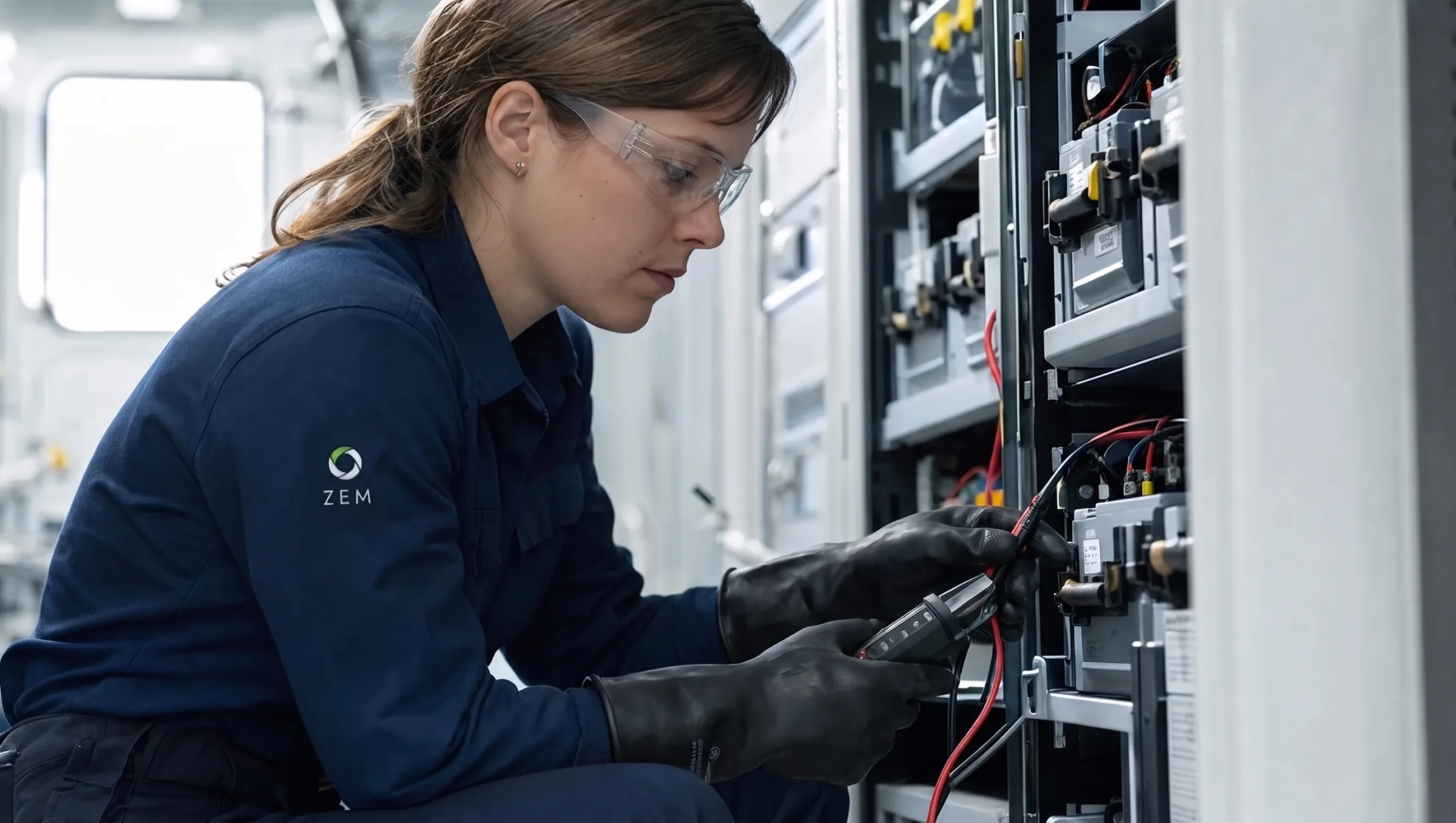
Every battery system is type-approved for marine use, and every battery space is designed by ZEM, with sensors, ventilation and fire suppression.
- Marine batteries since
- 2010
- Helped write the first battery guidelines
- DNV
- First installation at sea
- 2015
- Incidents since 2015
- 0
Start with the route
Tell us how the vessel works, and our engineers size the system around it.