· Insight · 3 min read
Zero-emission in the World Heritage fjords: what it takes
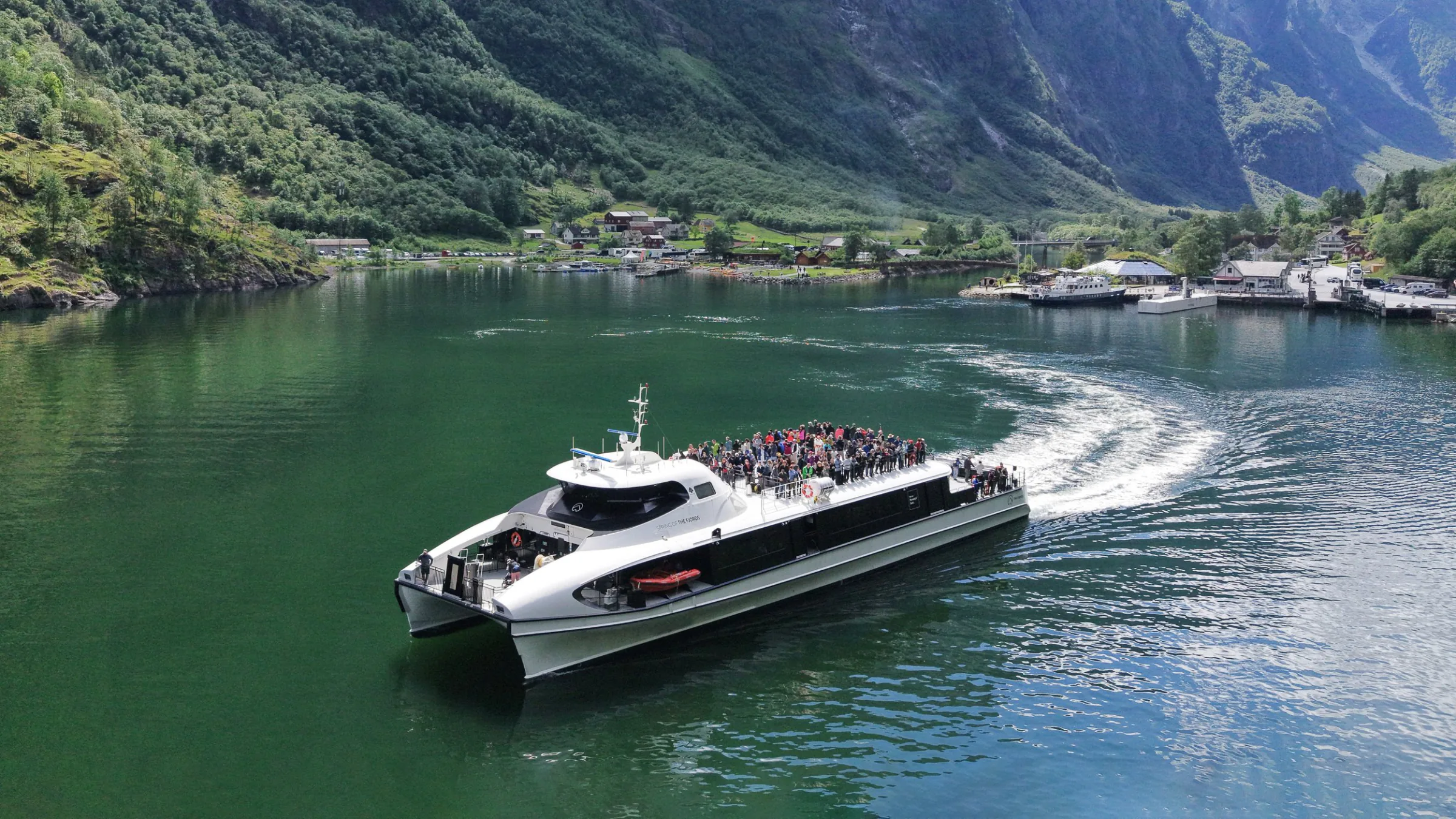
Since 1 January 2026, passenger ships under 10,000 gross tonnes must sail zero-emission in Norway's World Heritage fjords. ZEM has the contract for the battery system on a new flagship for The Fjords, built for exactly these waters: a 1,480 kWh LFP Power system, ready for megawatt charging.
1.48 MWh
LFP Power battery system
800 kW
MCS charging today, 1.2 MW next
5
World Heritage fjords under the rule
2026
zero-emission for ships under 10,000 GT
The zero-emission rule in the fjords
The Norwegian Maritime Authority set the requirement on behalf of the Ministry of Climate and Environment, announced in April 2025. It covers the five World Heritage fjords: the Nærøyfjord, Aurlandsfjord, Geirangerfjord, Sunnylvsfjord and Tafjord, part of the West Norwegian Fjords on UNESCO's World Heritage List.
1 January 2026
Passenger ships under 10,000 GT must be zero-emission.
1 January 2032
The same requirement for larger passenger ships.
- Ships must use shore power where it is available.
- Biogas is allowed, if it is kept apart from fossil fuel all the way until it is bunkered on board.
Read the government's announcement (in Norwegian).
Why sightseeing vessels suit batteries
Sightseeing boats and passenger ferries run fixed routes to a known timetable. Their energy use is predictable, so the battery can be sized to the route and to the minutes at the quay, with no excess weight or cost.
For the guests, a battery means no exhaust, noise or vibration on deck. In a World Heritage fjord, that is what the trip is for.
1.48 MWh, charged between departures
At the core of ZEM's delivery is a 1,480 kWh LFP Power battery system, based on lithium iron phosphate. It is configured for the Megawatt Charging System (MCS), for the short, high-power shore charging that a busy sightseeing schedule needs.
MCS is a charging standard first developed for heavy electric trucks, built for power in the megawatt range. MCS chargers deliver about 800 kW today, with 1.2 MW as the next step, so the battery is topped up while passengers go ashore and board.
Ten years in the same fjords
The new vessel is being built at Brødrene Aa in Hyen, which builds lightweight carbon-fibre passenger vessels. The yard has delivered three catamarans with ZEM systems to The Fjords: Vision of the Fjords (2016), Future of the Fjords (2018) and Legacy of the Fjords (2020). Vision and Future were each named Ship of the Year. ZEM has also delivered the shore charging in Flåm and Gudvangen.
“Delivering our LFP Power system for this vessel reflects the maturity of ZEM's battery technology for demanding, high-utilisation passenger operations. An MCS-ready 1.48 MWh system gives The Fjords the energy and the charging headroom to run a full sightseeing schedule with zero emissions in exactly the waters where it matters most.”
Planning a vessel for the fjords
- Size the battery to the longest day, not the average trip. The number of departures and the minutes at the quay decide it.
- Plan shore charging at the quays together with the vessel. The rule requires shore power where it is available, and the charging power decides how small the battery can be.
- Choose a chemistry for many cycles. LFP batteries handle frequent charging well, which suits a schedule with a charge at every stop.
- Larger passenger ships, from 10,000 GT, have until 1 January 2032, but the same planning applies.
Questions and answers
Which fjords have a zero-emission requirement?
The five World Heritage fjords in Norway: the Nærøyfjord, Aurlandsfjord, Geirangerfjord, Sunnylvsfjord and Tafjord.
When does the zero-emission requirement apply?
From 1 January 2026 for passenger ships under 10,000 gross tonnes, and from 1 January 2032 for larger passenger ships.
How can a passenger vessel meet it?
With a battery system sized to the route and charged from shore at the quay. Ships must use shore power where it is available; biogas kept apart from fossil fuel is also allowed.
Planning a vessel for the fjords? Talk to our sales team.
Photo: Brødrene Aa