· Product · 3 min read
Marine battery type approval: the Cube passes DNV and BV
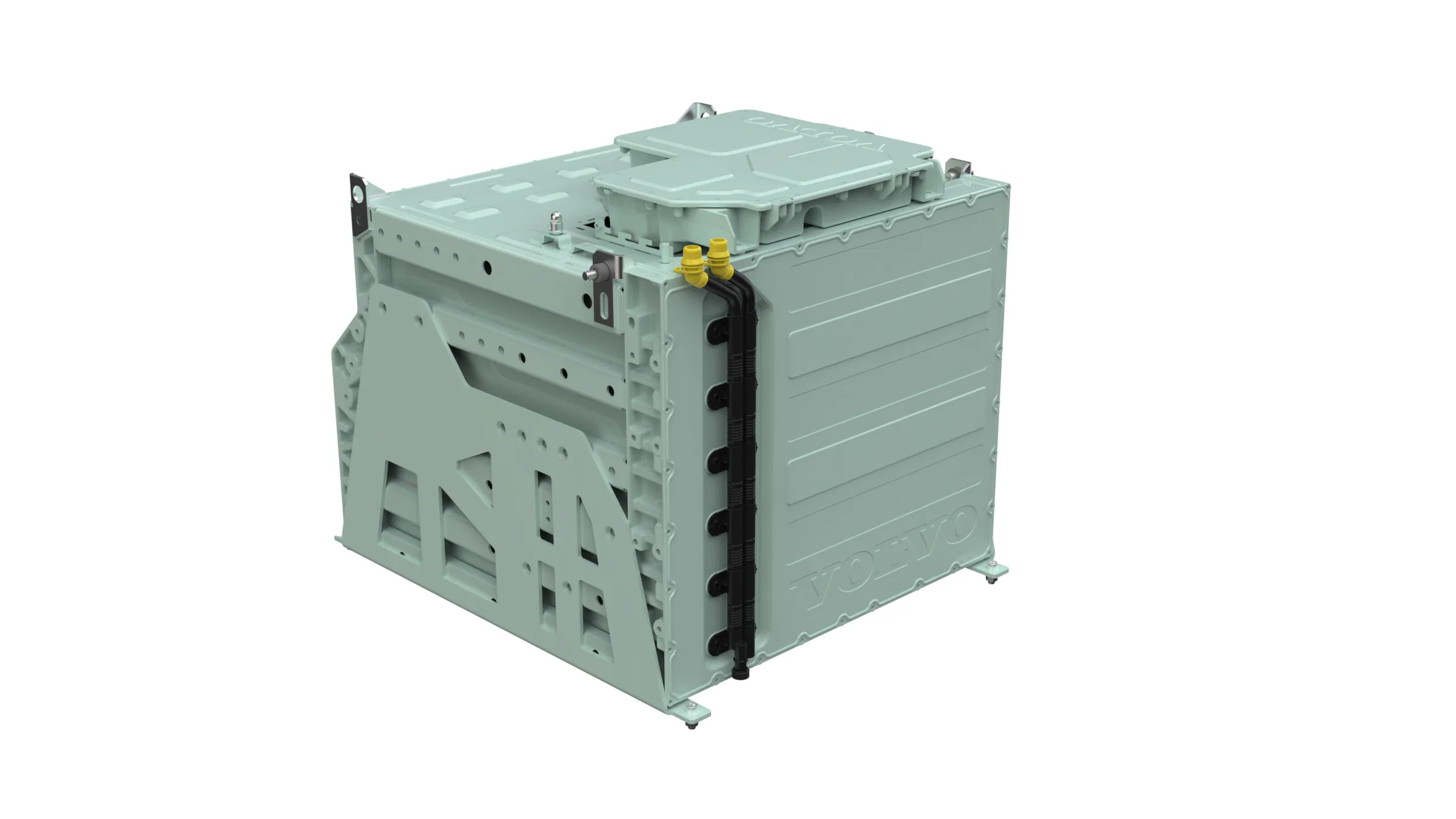
ZEM's NCA Cube battery has marine type approval from both DNV and Bureau Veritas. For shipowners, yards and designers, that is a new, approved battery option for newbuilds and retrofits, and one less thing to prove on each new vessel.
90 kWh
per pack
532 kg
per pack
< 0.36 m³
per pack
DNV · BV
type-approved by both
What marine type approval means
A type approval is a class society's confirmation that a product design meets its rules. The class society reviews the design and the documentation, and a sample is tested to agreed test specifications.
Once a design is approved, it can go into vessel after vessel without being approved from scratch each time. Each installation is still checked on board, but the battery itself is already accepted.
For a battery, the class society looks at how the cells, modules and packs are built and monitored, how faults are found and handled, and how the system copes with the conditions it will meet at sea.
Tested to IACS UR E10
The Cube is tested to IACS UR E10, the common test specification that class societies use for type approval of electrical, electronic and programmable equipment on ships. It covers conditions such as vibration, heat, cold, damp, salt mist and electromagnetic compatibility.
The Cube is approved for vessels with the BATTERY SYSTEM class notation.
From the road to the sea
The Cube builds on NCA battery technology from the bus and truck segment, where it is made in large volumes. ZEM has adapted it for marine use and taken it through type approval with both class societies, bringing the quality and volume of automotive production to a marine battery.
Key figures
- Compact: each pack holds 90 kWh in under 0.36 m³ and weighs 532 kg.
- Scalable: packs connect in parallel, from 90 kWh to several MWh.
- Layered safety: the battery is monitored at cell, module and pack level under ZEM's master BMS for the whole system. Insulation is monitored continuously, current sensing is redundant and the contactors are checked by diagnostics.
- Cells: each pack has 4,680 cylindrical cells of the 21700 type, with NCA chemistry, from Samsung SDI. The cells have passed all required safety tests.
- Built for harsh conditions: liquid-cooled and rated IP67 and IPX9K.
Where the Cube fits
Because the packs connect in parallel, the same 90 kWh building block suits anything from harbour craft to large ferries. The Cube sits beside ZEM's LFP Power and LFP Energy packs, so each vessel gets the chemistry that suits its route and load.
On feed barges, ZEM uses Cube packs in a drop-in hybrid unit: 180 or 270 kWh in a footprint of 1,200 × 1,200 mm.
ZEM designs the battery space around the system, with sensors, ventilation and fire suppression, and follows it after delivery, with ZEM Hegre to find the cause when a fault is reported.
What the figures mean in practice
Per pack, 90 kWh in 532 kg is about 170 Wh per kilogram, and 90 kWh in under 0.36 m³ is more than 250 kWh per cubic metre, measured at pack level. That matters most where weight and space are scarce: fast crewboats, small ferries and harbour craft.
What to ask for when you choose a marine battery
- Type approval from the class society your vessel is classed with.
- The class notation the battery is approved for.
- How the battery is monitored, from cell to system, and how faults are handled.
- Cooling and ingress protection that suit the space where it will sit.
- Who follows the system after delivery, and how.
Questions and answers
What is marine type approval for a battery?
A class society's confirmation that the battery design meets its rules, after a review of the design and tests of a sample. An approved design can be installed on vessel after vessel without being approved from scratch.
Which class societies have approved the Cube?
DNV and Bureau Veritas. The Cube is tested to IACS UR E10 and approved for vessels with the BATTERY SYSTEM class notation.
How big is a Cube pack?
90 kWh in under 0.36 m³, at 532 kg. Packs connect in parallel, from 90 kWh to several MWh.
Choosing a battery for a newbuild or a retrofit? Talk to our sales team.
Render: Volvo Group